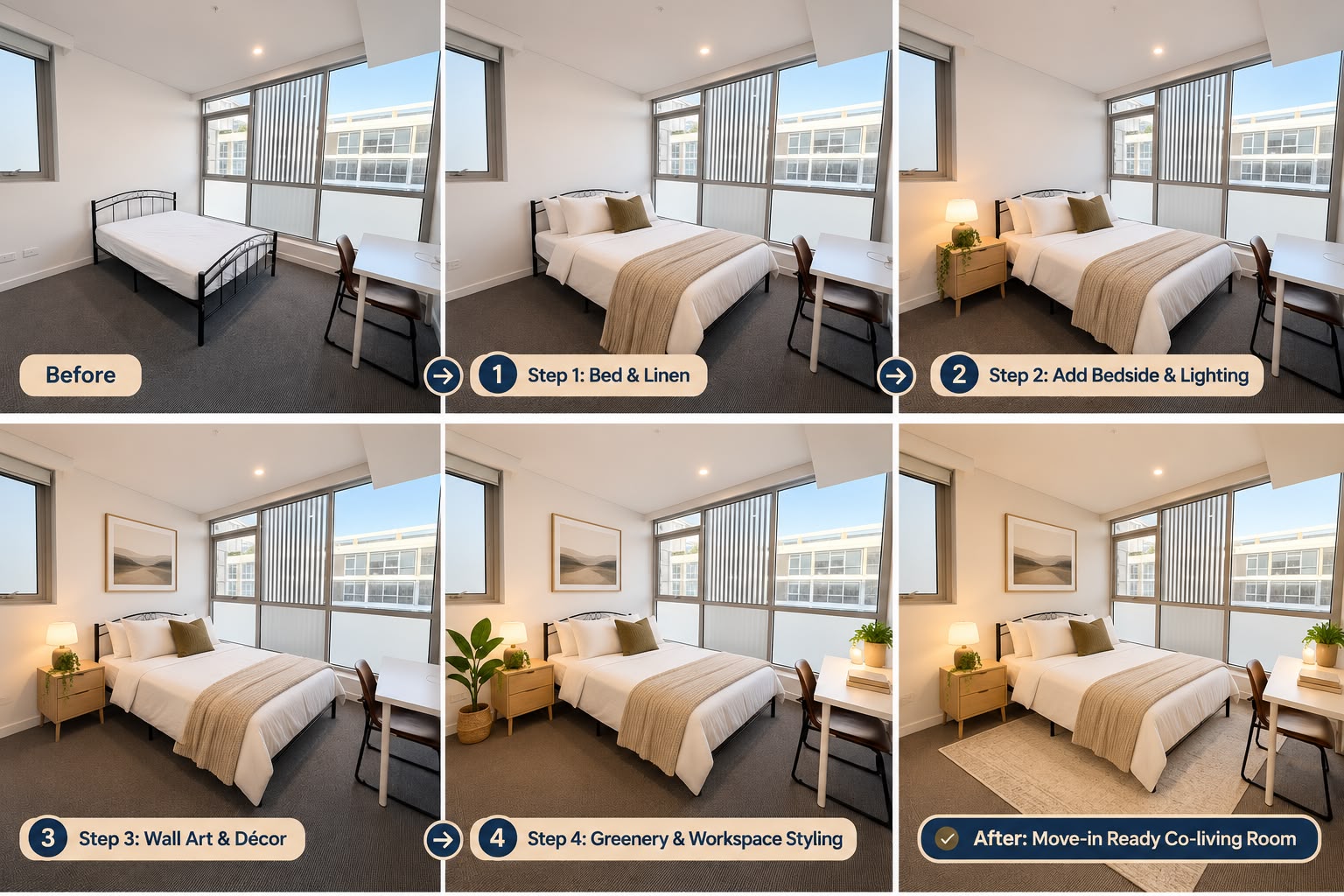
No Kitchenette in Your Co-Living Property? Here's a Simple, Affordable Alternative
How a simple sideboard, microwave, coffee machine and bar fridge can transform an empty space into a practical kitchenette-style setup

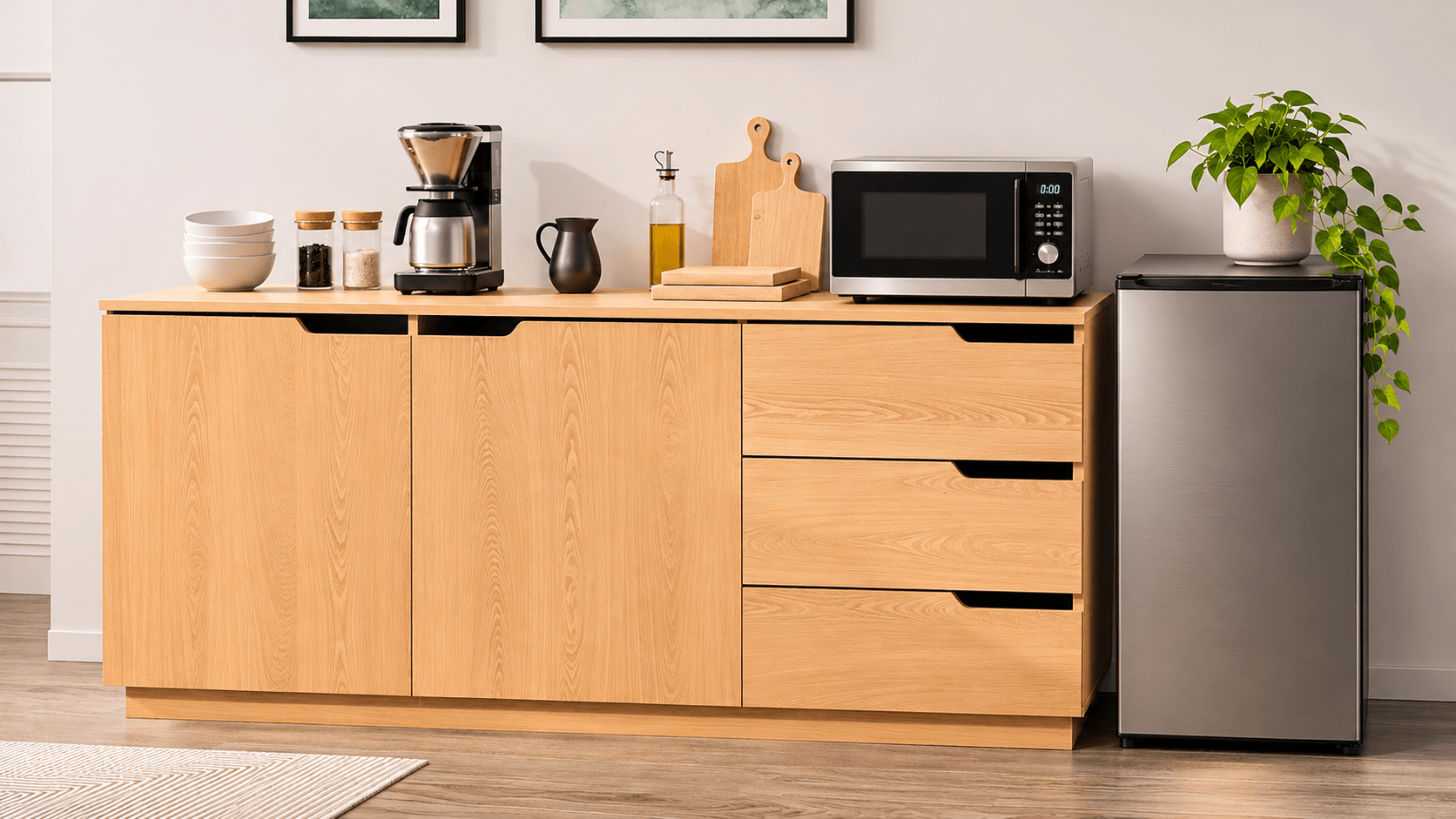


How a simple sideboard, microwave, coffee machine and bar fridge can transform an empty space into a practical kitchenette-style setup — without building a kitchen.
When designing a co-living property, one of the biggest challenges is making each living space feel comfortable, functional and independent.
Ideally, residents should have access to everyday conveniences without needing to walk to the main kitchen every time they want a coffee, heat up a meal or grab a cold drink.
But what happens when your builder hasn't included a kitchenette in the design?
Installing a proper kitchenette after construction can be expensive. You may need additional cabinetry, plumbing, electrical work, benchtops and potentially further approvals.
The good news? You don't necessarily need a fully installed kitchenette to create a kitchenette-like experience.
Sometimes, a few cleverly selected pieces of furniture and appliances can make a surprisingly big difference.
The Solution: A Kitchenette Without the Kitchen
One of the simplest ways to achieve this is by using a freestanding sideboard with built-in drawers and cupboards.
Rather than installing custom kitchen cabinetry, you can turn an ordinary sideboard into a compact food preparation, storage and beverage station.
The setup is straightforward:
- A sideboard with drawers and cupboards: Provides a benchtop-like surface and essential storage.
- A microwave: Allows residents to reheat meals, prepare snacks and warm drinks.
- A coffee machine: Creates a convenient coffee station without needing to access the main kitchen.
- A compact bar fridge: Provides space for milk, beverages, snacks and everyday refrigerated essentials.
- Cutlery and kitchenware storage: Drawers can hold spoons, forks, knives, plates, bowls, mugs and other everyday items.
- Small accessories: A kettle, chopping board, containers and a few decorative pieces complete the setup.
The result is a practical kitchenette-style area that looks intentional, feels welcoming and doesn't require major construction.
Why This Works So Well in Co-Living Properties
1. It Creates a More Independent Living Experience
One of the attractions of co-living is the balance between private living and shared facilities.
While residents may share a fully equipped main kitchen, having a small food and beverage station closer to their room or living area can make everyday life much more convenient.
Imagine being able to make your morning coffee, heat up leftovers or grab something from the fridge without heading to the communal kitchen.
These little conveniences can make the space feel more like a private studio, even though it isn't a fully self-contained dwelling.
2. It Avoids the Cost of Building a Kitchenette
A traditional kitchenette can involve significant costs beyond the cabinetry itself.
Depending on the design, you may need plumbing, drainage, waterproofing, additional electrical outlets, a benchtop and installation labour.
A freestanding sideboard setup avoids much of this complexity.
Instead of paying for custom cabinetry and construction, you're essentially furnishing the space with readily available products.
And because the furniture isn't permanently installed, it can be replaced, upgraded or relocated relatively easily.
3. It Provides Surprisingly Good Storage
This is where the sideboard really shines.
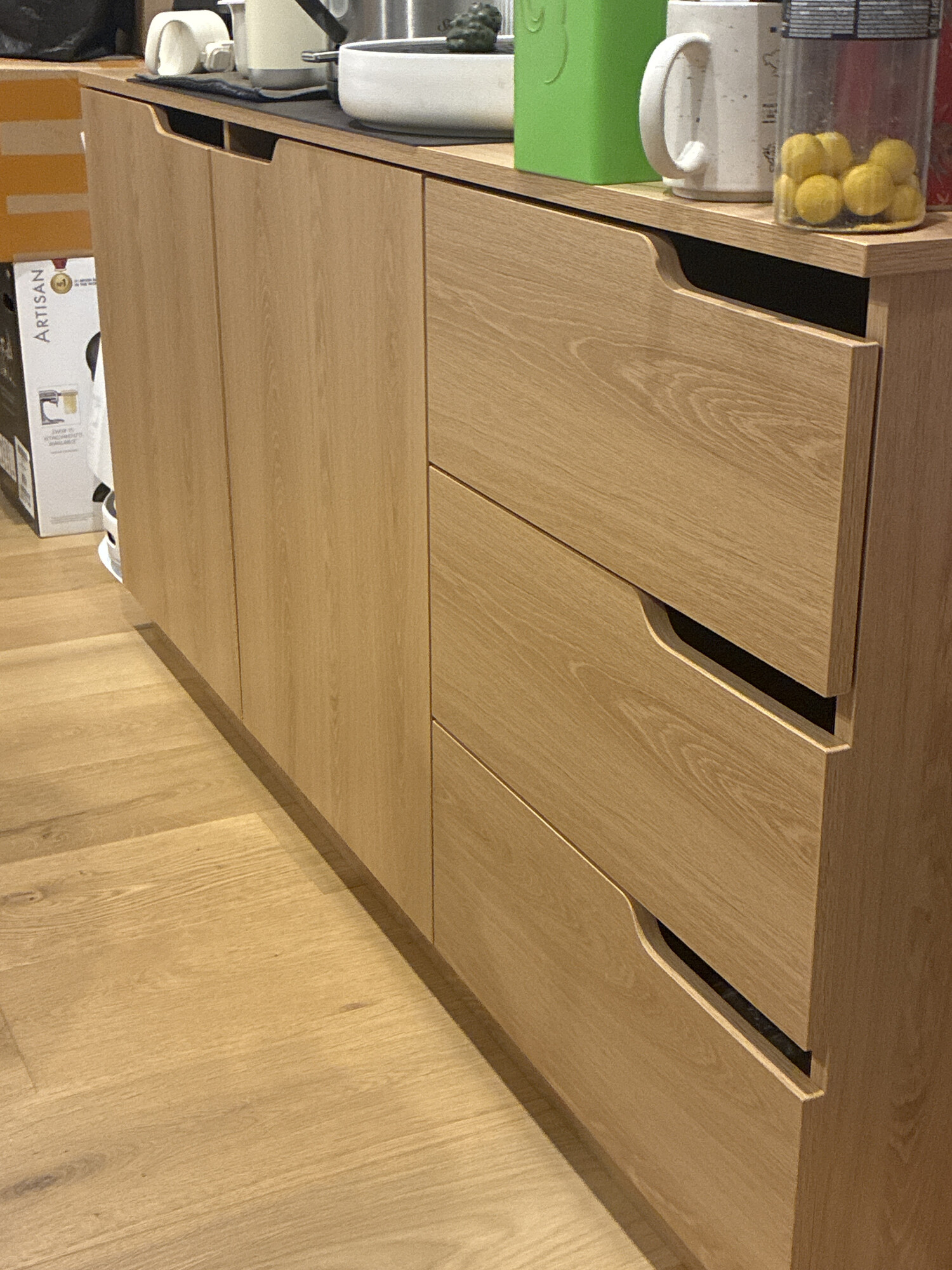
A well-designed sideboard can offer much of the everyday storage functionality you'd expect from kitchen cabinetry.
The drawers can accommodate cutlery organisers, utensils, kitchen knives and smaller accessories.
The cupboards can hold plates, bowls, cups, glasses, food containers, dry groceries and cleaning supplies.
With a little organisation, residents can have most of their everyday essentials within easy reach.
It's a simple way to make a small living space more functional without taking up excessive floor area.
4. It Looks Better Than a Collection of Random Appliances
There's a big difference between placing a microwave on a random table and creating a thoughtfully designed kitchenette-style station.
Choosing a sideboard that complements the room, positioning the appliances neatly and adding a few decorative accessories can make the entire setup look like part of the original interior design.
A timber sideboard, for example, can add warmth to a room while offering a clean, contemporary appearance.
Add a coffee machine, microwave, compact fridge and a few coordinated accessories, and the space immediately feels more purposeful.
The goal isn't to pretend it's a full kitchen. It's to make the space feel more complete.
Important: It's Not a Replacement for a Compliant Kitchen
It's worth making one distinction clear.
This setup is a kitchenette-style convenience station, not a fully functional or legally self-contained kitchen.
It doesn't include a sink, cooking facilities or the other features that may be required for a space to qualify as a separate dwelling or self-contained unit.
It also doesn't change the property's planning approval, building classification or permitted occupancy.
For co-living properties, the main shared kitchen should still provide the facilities required under the applicable approvals and regulations.
Before installing appliances, ensure suitable electrical outlets, ventilation, safe clearances and adequate fridge airflow are available.
The purpose of this approach is to improve convenience and amenity, not to bypass building requirements.
Small Improvements Can Make a Big Difference
At Wefurnish, we believe property investment isn't just about buying the right property. It's also about making the property work better for the people who live there.
In co-living accommodation, thoughtful furnishing decisions can improve presentation, functionality and the overall resident experience.
And sometimes, those improvements don't require expensive renovations or structural changes.
A simple sideboard, a microwave, a coffee machine and a compact fridge can turn an otherwise underutilised wall into a practical, attractive feature.
Will it replace a proper kitchenette? No.
But can it make a co-living space feel more convenient, comfortable and independent for a fraction of the cost? Absolutely.
And that's the kind of smart, cost-effective thinking that can add real value to a co-living property.


Subscribe to our email newsletter today!