From Basic to Beautiful: A Co-Living Bedroom Makeover in 5 Simple Steps
How thoughtful furniture, styling and a few finishing touches can transform an ordinary rental bedroom into a warm, welcoming space.

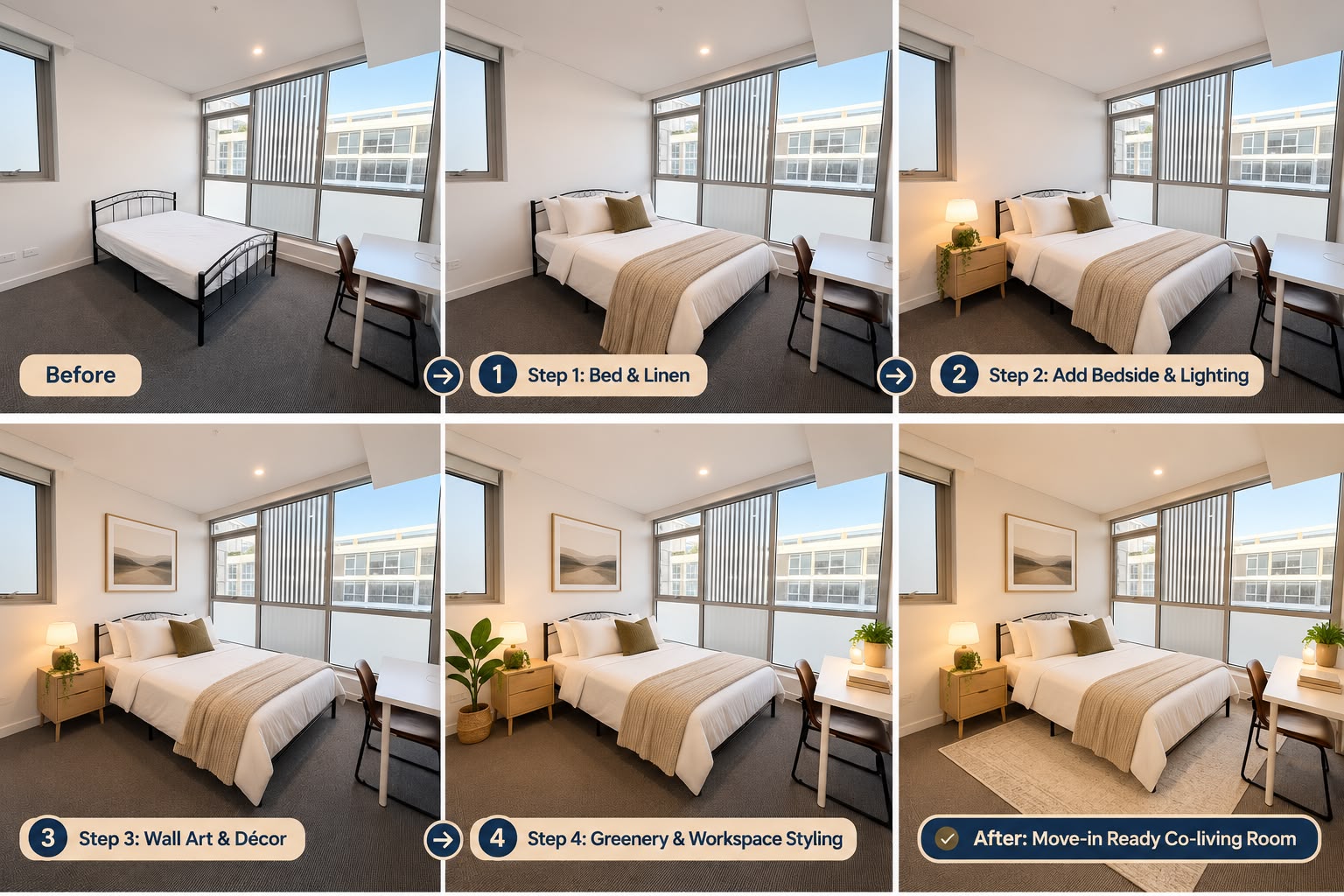


From Basic to Beautiful: A Co-Living Bedroom Makeover in 5 Simple Steps
How thoughtful furniture, styling and a few finishing touches can transform an ordinary rental bedroom into a warm, welcoming space.
Not every property transformation needs a renovation, expensive furniture or a complete redesign.
Sometimes, it's the smaller details that make the biggest difference.
At WeFurnish, we believe that even the simplest room can become an inviting, functional and beautifully presented space with the right furnishing and styling choices.
To demonstrate, we've taken a basic co-living bedroom and reimagined it in five simple stages.
The goal? Create a bedroom that feels comfortable, looks appealing in rental listings and offers residents a space they can genuinely enjoy living in.
Let's walk through the transformation.
Before: A Functional Room Without Personality
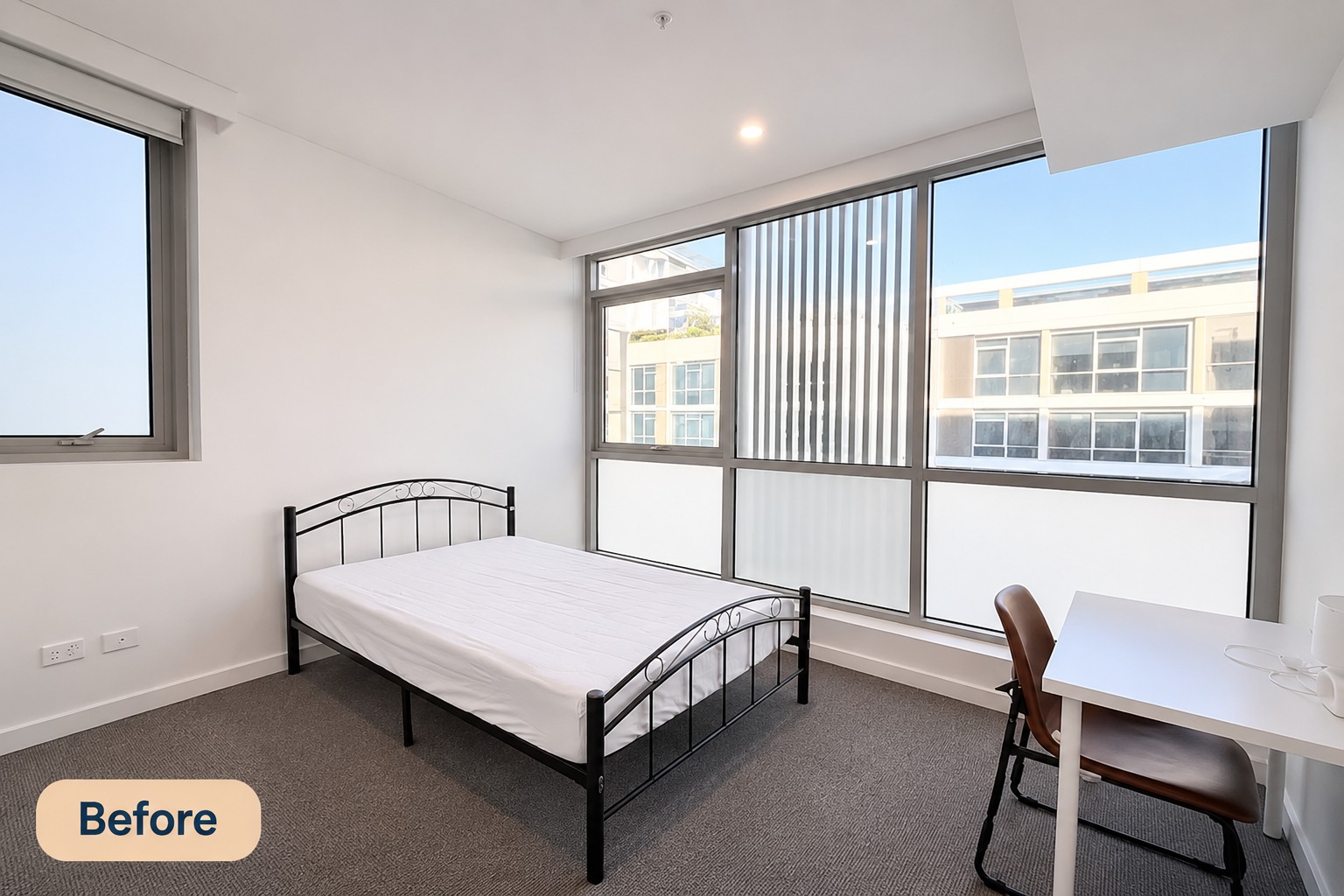
Our starting point was a typical furnished co-living bedroom.
The room already had the essentials: a bed, mattress, study desk and chair. It also benefited from plenty of natural light, large windows and neutral walls.
But something was missing.
Despite being functional, the room felt cold, empty and uninspiring.
There was little visual warmth, no real colour palette and nothing that made the space feel particularly welcoming.
For a prospective tenant browsing online, it was simply another bedroom.
Our challenge was to change that without undertaking any structural renovations.
Step 1: Start With the Bed & Linen
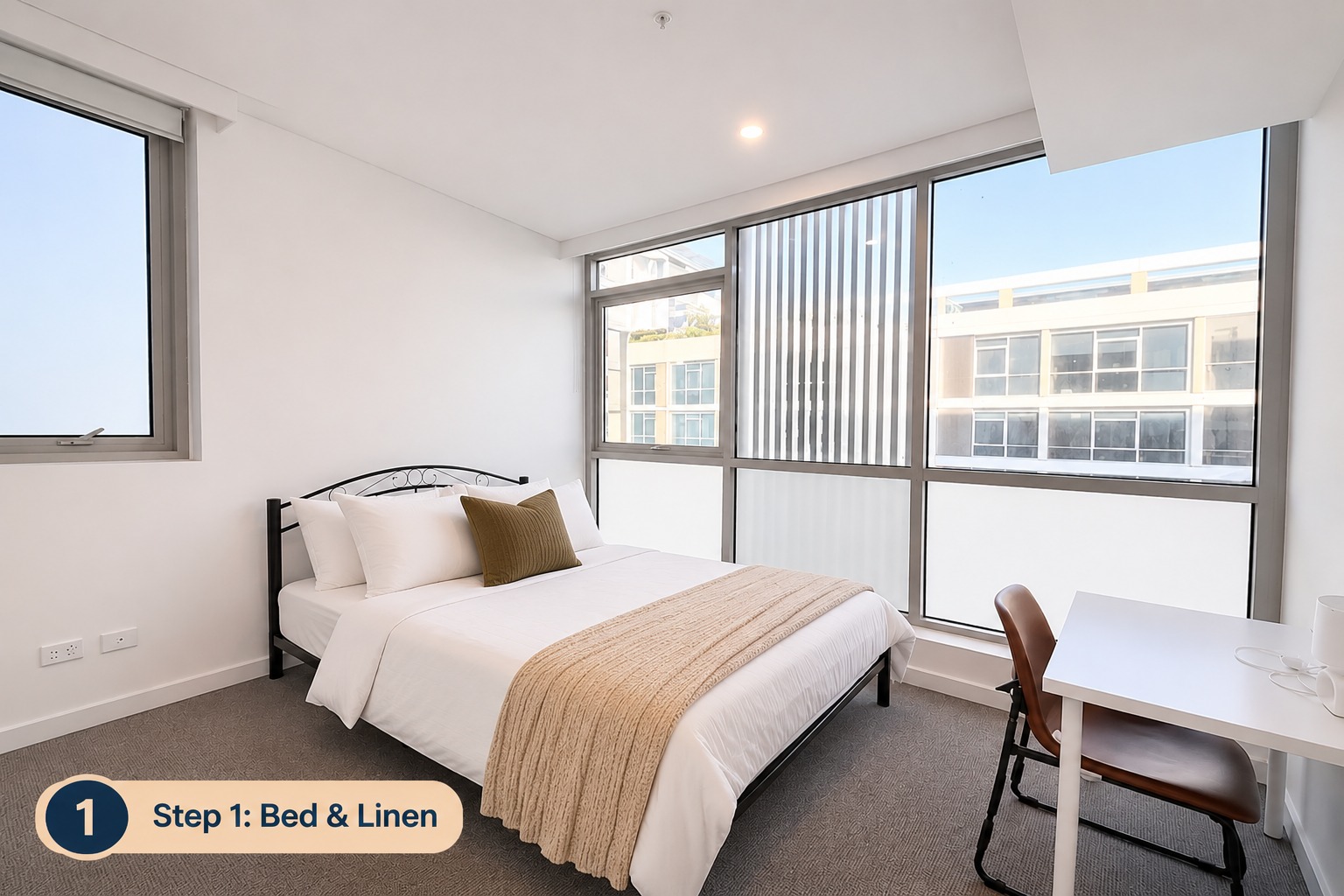
The bed is the visual centrepiece of most bedrooms, making it the natural starting point.
We introduced crisp white bedding, layered pillows, a textured beige throw and an olive-toned accent cushion.
These relatively simple additions immediately softened the room.
The white linen created a fresh, hotel-inspired appearance, while the textured throw and accent cushion introduced warmth and personality.
The design principle: Layering different textures and complementary colours can make even a basic bed feel more luxurious.
For co-living properties, this is particularly useful because it creates an inviting presentation without requiring expensive furniture upgrades.
Step 2: Introduce Bedside Furniture & Warm Lighting
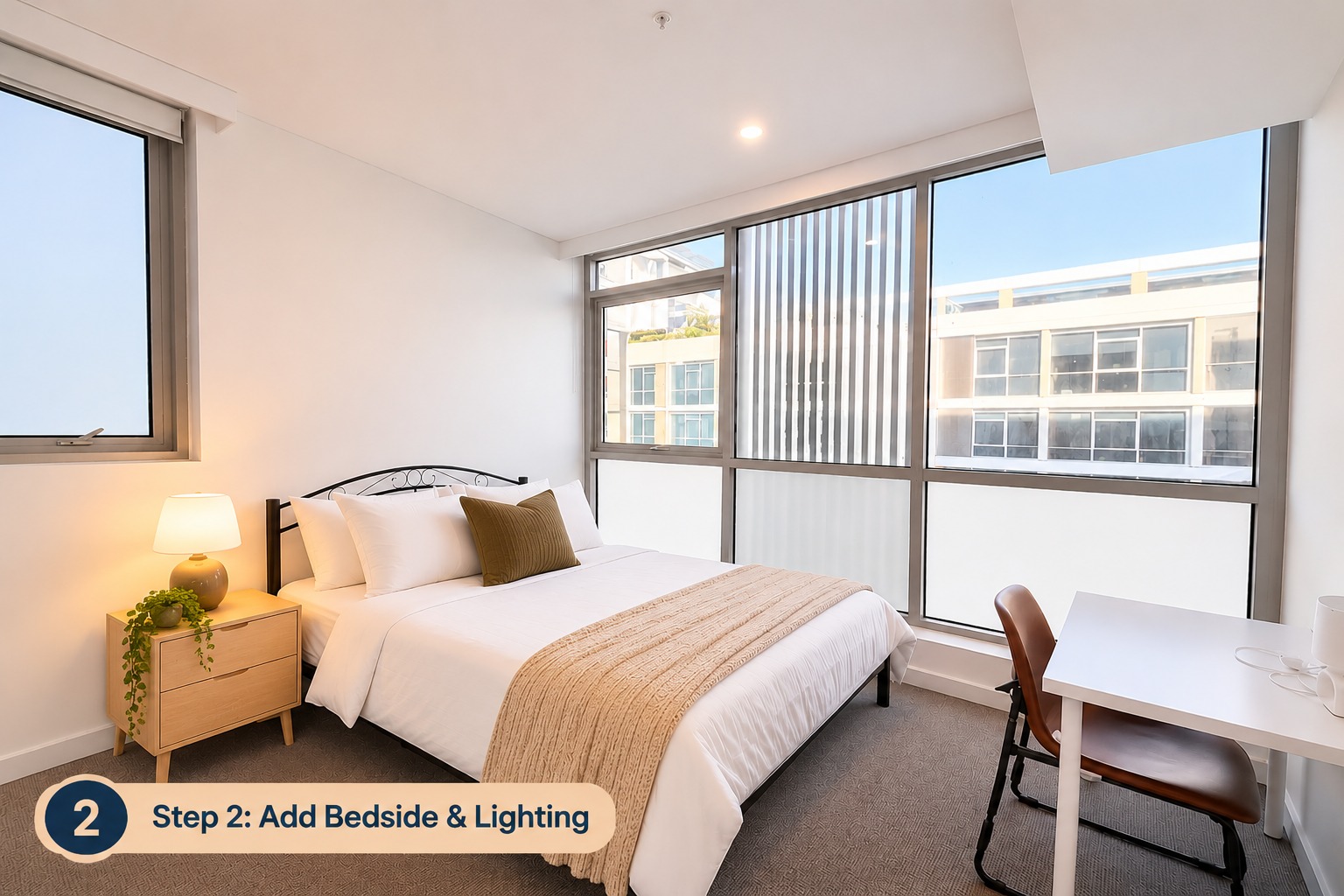
Next, we addressed one of the most noticeable gaps in the original room: the lack of bedside furniture and lighting.
We introduced a compact timber-look bedside table, a warm bedside lamp and a small decorative plant.
The difference was immediate.
The bedside table added practical storage, while the lamp introduced softer, warmer lighting.
Rather than relying entirely on overhead lighting, the room now offered a more relaxed atmosphere suitable for reading or winding down.
The natural timber finish also complemented the neutral bedding, bringing a cohesive feel to the space.
The design principle: Good styling should balance appearance with everyday practicality.
A bedside table isn't just decorative. It provides a convenient place for personal belongings, charging devices and keeping essentials within reach.
Step 3: Add Wall Art & Personality
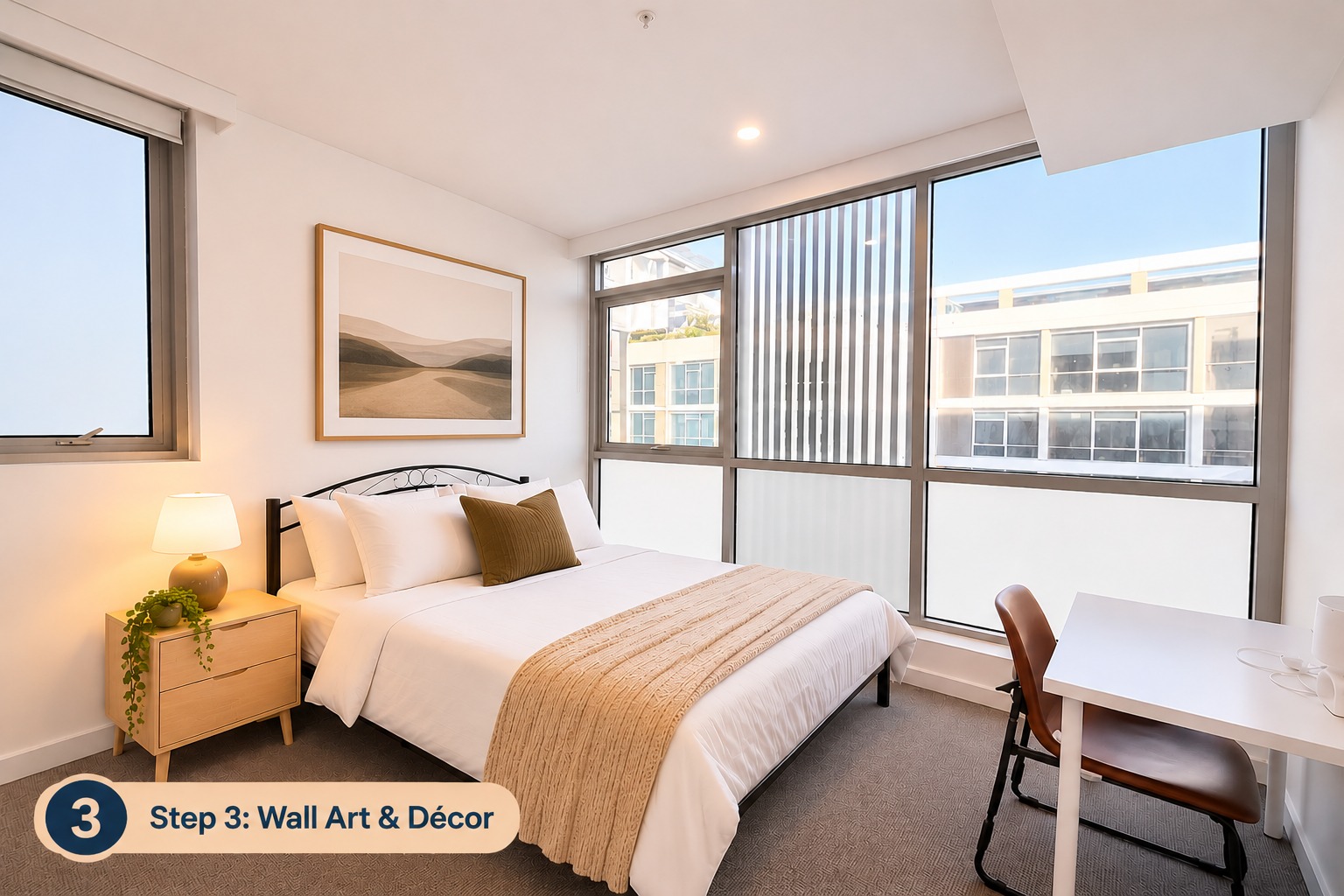
With the bed and bedside area established, it was time to address the empty walls.
We introduced a framed landscape artwork featuring soft, earthy tones.
The artwork helped tie together the room's developing colour palette, connecting the beige bedding, olive accent cushion and timber furniture.
More importantly, it gave the room a focal point.
Previously, the blank wall made the space feel unfinished. With a single carefully selected artwork, the bedroom began to feel thoughtfully designed.
The design principle: You don't need to fill every wall with decoration.
One well-positioned piece of artwork can be more effective than several smaller pieces, particularly in compact bedrooms where visual simplicity matters.
Step 4: Bring in Greenery & Style the Workspace
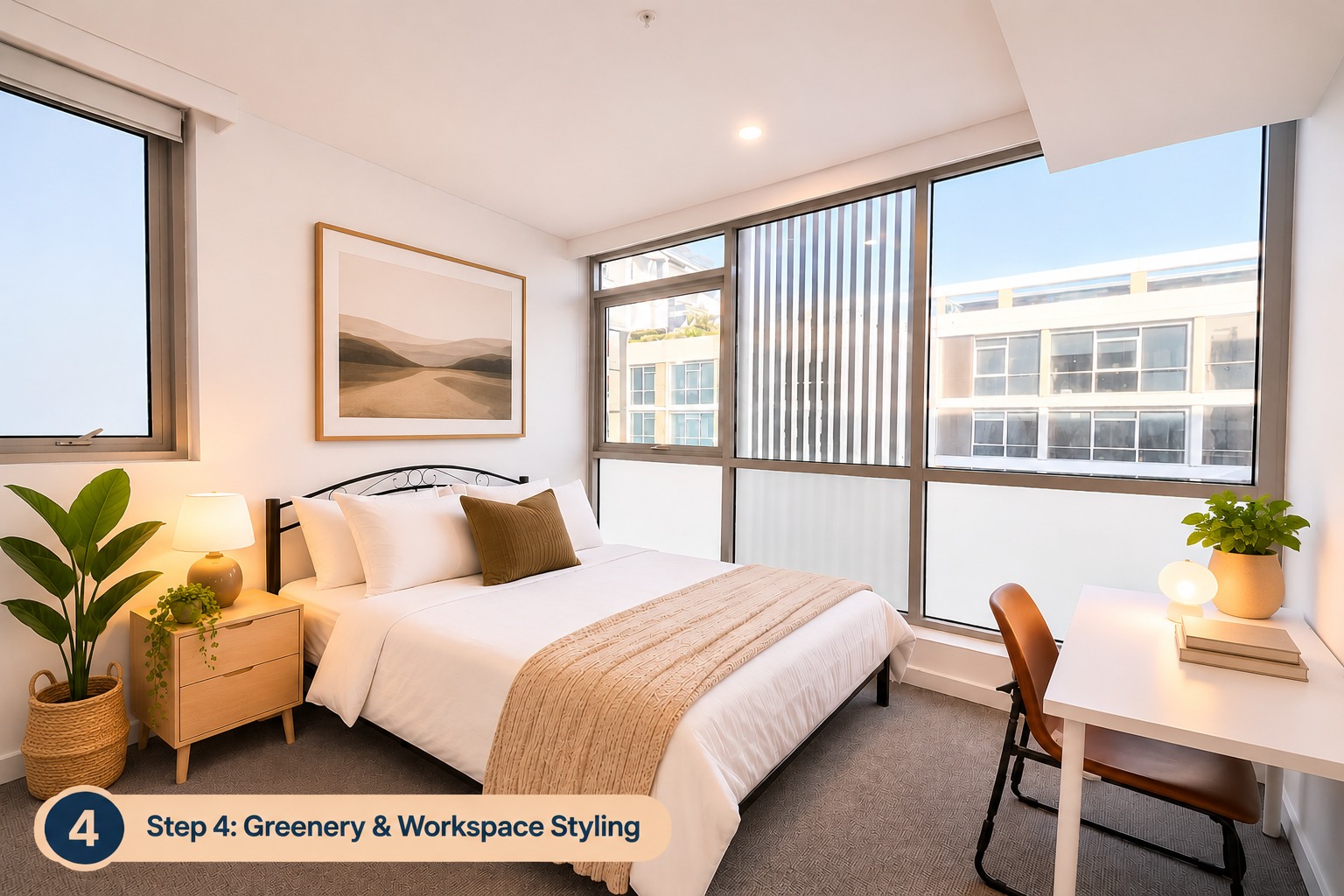
A co-living bedroom often serves multiple purposes.
It's not just somewhere to sleep. For many residents, it's also a place to study, work remotely or spend personal time.
That's why we wanted to give the existing workspace more attention.
We introduced a small desk lamp, a decorative plant and a few carefully selected accessories.
These additions made the desk feel more intentional and inviting without compromising its functionality.
We also introduced a larger floor plant beside the bed, adding greenery and visual balance to the room.
The combination of natural textures, warm lighting and greenery helped soften the previously clinical atmosphere.
The design principle: A well-furnished bedroom should support the way residents actually live.
By styling both the sleeping and working areas, we created a more complete living environment.
Step 5: The Finishing Touch — Add a Rug
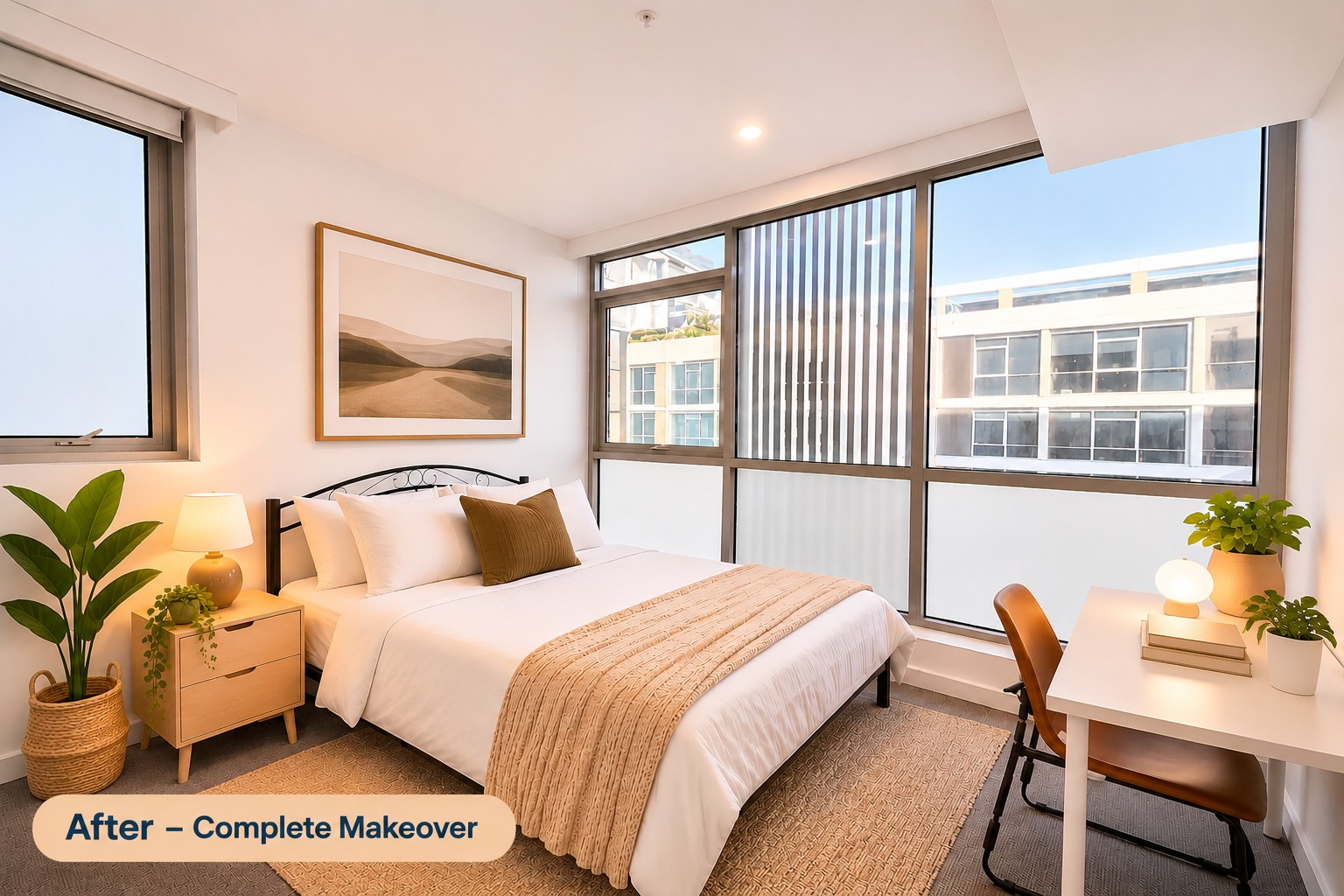
The final addition was a neutral textured rug.
Although the room already had carpet, the rug helped visually define the sleeping area and introduce another layer of texture.
It also complemented the beige throw, timber furniture and warm decorative elements.
With this final touch, the room felt complete.
What started as a basic furnished bedroom had become a cohesive, warm and welcoming space.
And importantly, the transformation was achieved through furnishing and styling rather than structural changes.
The Before & After: Small Changes, Big Difference
Looking at the original room beside the final concept, the transformation is striking.
The walls, windows, flooring and overall layout remain the same.
What changed was the presentation.
We introduced a coordinated colour palette, layered bedding, practical bedside furniture, warm lighting, artwork, greenery and thoughtful finishing touches.
Each addition contributed to the overall result.
The room now feels less like temporary accommodation and more like a comfortable personal retreat.
For co-living property owners, this approach can be especially valuable.
A well-presented room may help attract more attention in rental listings, create a stronger first impression and differentiate the property from competing accommodation.
Of course, furnishing alone doesn't guarantee higher rental returns or faster leasing. Location, pricing, amenities and property management all remain important.
But presentation is one factor property owners can directly influence.
Why Furnishing Matters for Co-Living Properties
Co-living accommodation presents a unique furnishing challenge.
Bedrooms need to be attractive, but they must also be practical, durable and suitable for everyday use.
Unlike a traditional home, where occupants may gradually furnish their own rooms, a furnished co-living property often needs to feel ready to move into from day one.
That means considering more than just a bed and desk.
Comfortable bedding, practical storage, suitable lighting, a functional workspace and a consistent interior design can all contribute to the resident experience.
And when furnishing multiple rooms, consistency becomes particularly important.
A coordinated approach helps create a professional presentation across the property while simplifying furniture selection and procurement.
A Better Space Doesn't Always Require a Bigger Budget
One of the biggest lessons from this makeover is that good design isn't necessarily about spending more.
It's about making thoughtful choices.
A coordinated set of affordable furnishings can often create a stronger visual result than expensive pieces selected without an overall design direction.
For property investors, the aim should be to balance three priorities:
- Presentation: Creating an attractive space that stands out in property photography.
- Functionality: Ensuring residents have everything they need for comfortable everyday living.
- Durability: Selecting furniture and finishes suitable for ongoing rental use.
Getting this balance right can help avoid unnecessary expenditure while still delivering a polished result.
Transform Your Property With WeFurnish
At WeFurnish, we help property owners, investors and accommodation operators turn empty or basic spaces into beautifully furnished, move-in-ready properties.
From furniture selection and procurement through to delivery, assembly, installation and final styling, our goal is to make the entire furnishing process simple.
Whether you're furnishing a co-living property, an investment apartment, an Airbnb or an entire accommodation development, we can help create a cohesive and practical furnishing solution.
Because a well-furnished property isn't just about filling rooms with furniture. It's about creating spaces people want to live in.
Ready to transform your property?
Get in touch with WeFurnish to explore a complete, done-for-you furnishing solution.


Subscribe to our email newsletter today!